Propaganda
Interpretations of Propaganda Across Social, Political, and Cultural Narratives
Introduction to Propaganda
Propaganda refers to the strategic use of communication to influence public attitudes, beliefs, or behaviors. It may involve selective information, emotional framing, or persuasive messaging designed to support particular social, political, or ideological objectives. While often associated with political campaigns or wartime communication, propaganda also appears in advertising, entertainment, education, and digital media. Understanding propaganda involves examining both the messages themselves and the broader social and cultural environments in which they are produced and interpreted.
Historical Uses of Propaganda
Throughout history, governments, institutions, and social movements have used propaganda to shape public perception and mobilize collective action. These efforts have included wartime messaging, political communication, and cultural campaigns designed to reinforce shared values or national identity. Historical examples are frequently referenced in scholarship as illustrations of how communication strategies can influence public opinion and legitimize political or military decisions.
Propaganda in Modern Media and Technology
The evolution of digital communication has transformed how information is produced, distributed, and consumed. Social media platforms, algorithmic content curation, AI‑generated media, and entertainment narratives all contribute to contemporary discussions about information reliability and media influence. These developments have raised questions about how modern communication environments shape public understanding and perception.
Interpretations of Propaganda in Conspiracy Narratives
Media scholars, cultural analysts, and sociologists often examine conspiracy-oriented interpretations of propaganda as reflections of broader concerns about institutional trust, transparency, technological influence, and the complexity of modern information systems. Supporters may view these narratives as warnings about centralized authority or social manipulation, while critics argue they can rely heavily on speculation, selective interpretation, or insufficient evidence.
Propaganda in Apocalyptic and End Times Narratives
Certain religious or symbolic frameworks incorporate propaganda into their interpretations of societal change or perceived moral decline. Within these narratives, propaganda may be described as a tool used to shape collective beliefs, promote unity or stability, or marginalize dissenting voices. These interpretations draw from scriptural motifs, cultural symbolism, and historical analogies, representing theological or narrative perspectives rather than predictive assertions.
Contemporary Issues Referenced in These Narratives
Modern topics such as environmental communication, public‑health messaging, and popular media are sometimes discussed within broader cultural narratives about influence and authority. These discussions illustrate how complex global issues can become integrated into interpretive frameworks that emphasize messaging, persuasion, and public perception.
Propaganda and Global Conflict Narratives
Propaganda is often associated with geopolitical tensions and international conflict. Messaging related to national security, economic stability, or ideological competition can influence how societies interpret global events. These perspectives highlight the role of communication in shaping collective responses to global challenges and uncertainties.
Critical Perspectives on Propaganda Claims
Scholars and analysts frequently examine the assumptions underlying cultural or speculative interpretations of propaganda. Common critiques include insufficient evidence, reductionism, and emotional reasoning. These critiques emphasize the importance of evaluating information sources, understanding context, and recognizing the psychological and cultural factors that shape belief formation.
Conclusion
Propaganda continues to play a significant role in shaping public perception across historical, social, political, and cultural contexts. Modern discussions reflect a wide range of interpretations—from academic analyses to symbolic or narrative frameworks. Examining these perspectives through a neutral, evidence‑based lens allows for a clearer understanding of how narratives develop and how they influence collective beliefs in an interconnected world.
References and Source Material
The following references include academic research, documentaries, entertainment media, historical materials, and interpretive works related to propaganda, persuasion, media influence, and public perception. Inclusion of a source reflects its relevance to historical study, cultural analysis, or public discussion and does not imply endorsement of any particular claim or interpretation.
Academic / Credible
Propaganda — Edward Bernays (1928). Foundational work examining public relations, persuasion, and the mechanics of influencing public opinion.
Manufacturing Consent — Edward S. Herman and Noam Chomsky (1988). Analysis of media systems, political influence, and the relationship between information and power structures.
Propaganda and Persuasion — Garth S. Jowett and Victoria O’Donnell. Widely used academic overview of propaganda theory, communication methods, and persuasion techniques.
Amusing Ourselves to Death — Neil Postman (1985). Examination of television, entertainment culture, and how media environments influence public discourse and perception.
The Image — Daniel J. Boorstin (1961). Analysis of media-generated “pseudo-events” and the relationship between public perception and modern communication culture.
Technopoly — Neil Postman (1992). Examination of technology, media systems, and the cultural effects of information-driven societies.
The Shock Doctrine — Naomi Klein (2007). Examination of crisis-driven political and economic policies and the narratives surrounding major global events.
Popular / Interpretive
The New World Order — A. Ralph Epperson (1989). Interpretive work connecting propaganda, global governance, and conspiracy-oriented narratives.
Behold a Pale Horse — William Cooper (1991). Influential cultural text within conspiracy-focused communities discussing secrecy, media influence, and institutional distrust.
Trust Me, I’m Lying — Ryan Holiday (2012). Exploration of online media manipulation, viral marketing, and the economics of digital attention systems.
Films & Scripted Media
They Live (1988). Science fiction film exploring hidden influence, consumer culture, and media manipulation.
Wag the Dog (1997). Political satire centered on media fabrication, public perception, and manufactured narratives.
Starship Troopers (1997). Satirical science fiction film frequently discussed in relation to militarism, propaganda, nationalism, and state messaging.
1984 (1956/1984). Adaptations of George Orwell’s dystopian novel examining surveillance, censorship, and ideological control.
Brazil (1985). Dystopian film focused on bureaucracy, media influence, and authoritarian systems.
V for Vendetta (2005). Political dystopian film examining propaganda, state power, resistance, and public messaging.
The Wave (2008). Drama exploring group psychology, authority, and social conformity.
The Hunger Games (2012–2023). Film series examining propaganda, spectacle, social control, and political resistance.
Documentaries
The Atomic Café (1982). Compilation documentary examining Cold War propaganda and nuclear-era public messaging.
Manufacturing Consent (1992). Documentary adaptation exploring media systems, political influence, and communication structures.
The Century of the Self (2002). Documentary series examining psychology, advertising, consumer culture, and mass persuasion.
The Power of Nightmares (2004). Documentary discussing political fear narratives, terrorism, and public perception.
HyperNormalisation (2016). Documentary exploring political narratives, media environments, and modern social systems.
The Social Dilemma (2020). Documentary examining algorithms, social media influence, and digital persuasion.
The Great Hack (2019). Documentary focused on data collection, political advertising, and information influence in the digital age.

Music
“It’s the End of the World as We Know It” — R.E.M. Song associated with cultural anxiety, media saturation, and apocalyptic imagery.
“Cult of Personality” — Living Colour. Song examining charisma, leadership influence, and political symbolism.
“The Revolution Will Not Be Televised” — Gil Scott-Heron. Spoken-word piece critiquing media culture and political passivity.
“Fight the Power” — Public Enemy. Song exploring political messaging, institutional criticism, and resistance themes.
“Sheep” — Pink Floyd. Progressive rock song frequently interpreted as commentary on conformity and social control.
Images / Historical Artifacts
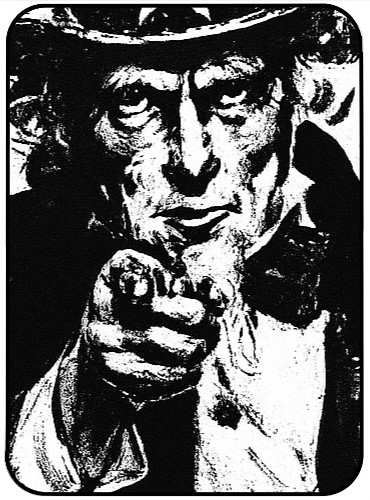
Uncle Sam “I Want YOU” Poster — Iconic American military recruitment poster associated with wartime propaganda and national mobilization.
World War II Propaganda Posters — Historical examples of patriotic messaging, wartime persuasion, and public morale campaigns.
Cold War Civil-Defense Materials — Government-produced educational and preparedness materials reflecting Cold War fears and nuclear-era messaging.
Soviet and Chinese Propaganda Posters — State-sponsored political artwork promoting ideological narratives and collective identity.
Doomsday Clock Imagery — Symbolic representation associated with nuclear risk, geopolitical tension, and apocalyptic concerns.
Related Products
-
Hoodies
Propaganda Black Hoodie
$52.29 – $56.29Price range: $52.29 through $56.29 Select options This product has multiple variants. The options may be chosen on the product page -
T-Shirts
Propaganda Black T-Shirt
$30.29 – $36.29Price range: $30.29 through $36.29 Select options This product has multiple variants. The options may be chosen on the product page -
Hoodies
Propaganda White Hoodie
$52.29 – $56.29Price range: $52.29 through $56.29 Select options This product has multiple variants. The options may be chosen on the product page -
T-Shirts
Propaganda White T-Shirt
$30.29 – $36.29Price range: $30.29 through $36.29 Select options This product has multiple variants. The options may be chosen on the product page